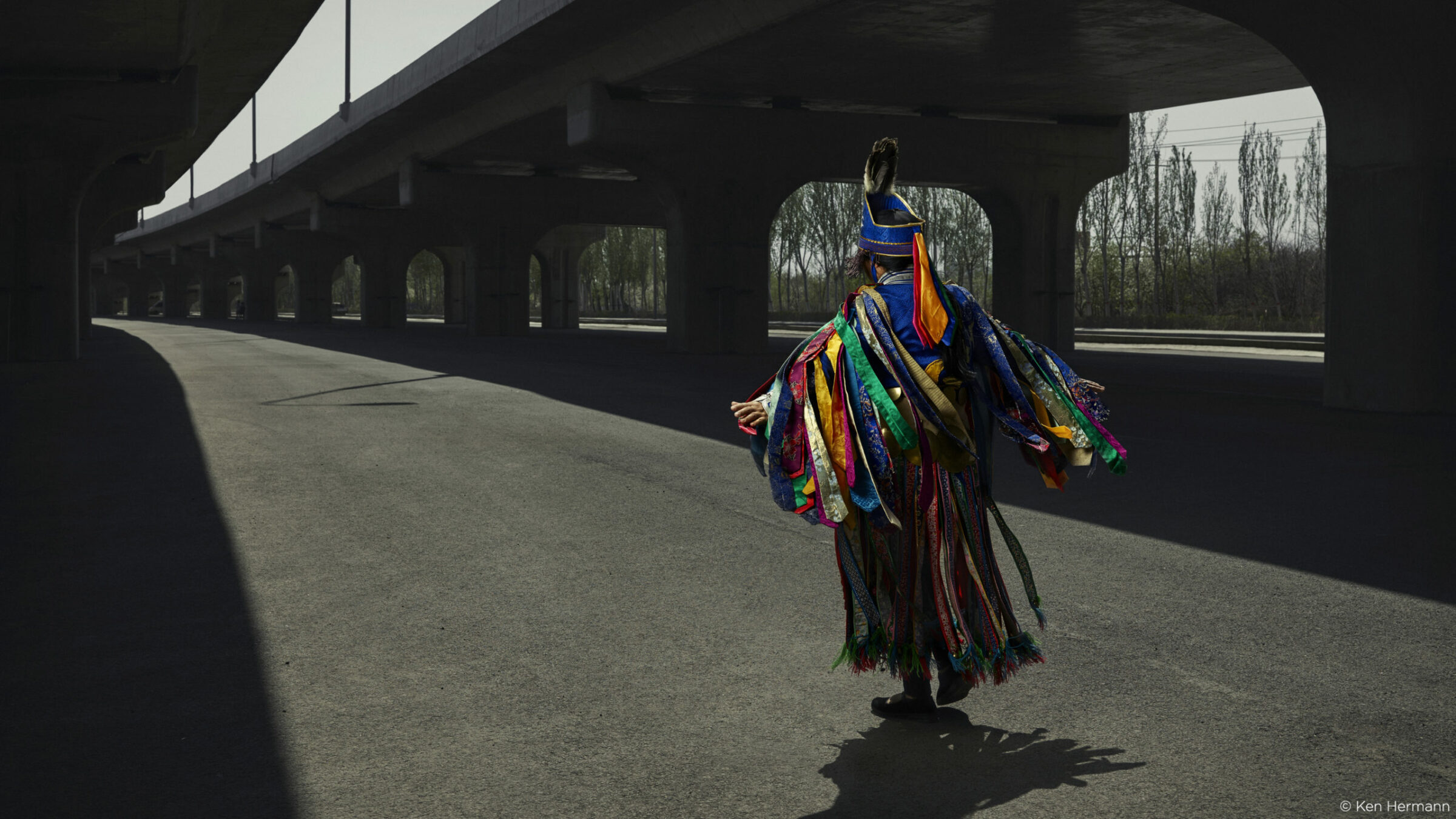
Joel Tjintjelaar and Ken Hermann
From portrait to architecture – versatility of the 45mm lens explained
The Versatilite 45mm Lens
Listen to the Full Article:
Ken Hermann is a portrait photographer. Joel Tjintjelaar specializes in architecture photography. Two very different genres, yet both photographers prefer the same lens: the Schneider Kreuznach 45mm Leaf Shutter Blue Ring lens. This lens is an extremely high-quality wide-angle lens with an impressive flat-field performance. The focal length is perfect for almost any application with edge-to-edge performance and almost distortion-free results. These qualities ensure that the versatility of the 45mm lens is guaranteed. Read on to learn how and why a portrait and an architecture photographer use this lens in their work and what it adds to their photography.
Architecture photography with the 45mm Blue Ring lens
Joel Tjintjelaar explains how the 45mm lens benefits his photography:
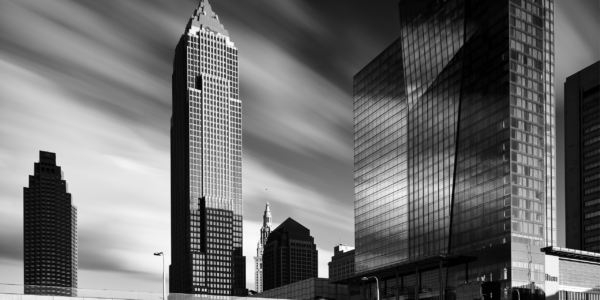
“Having the right lens can make all the difference. When it comes to architecture photography, the 45mm focal length is especially useful when you’re aiming to shoot skylines or want to focus on specific elements of architectural objects.”
“The 45mm gives you the longer view on objects; you can include the environment instead of just a single architectural object. Therefore it is ideal for photographers with a fine-art approach who want to tell a story or convey an idea.
“I even used it for still life photographs. It is a very versatile lens, and the quality is beyond any doubt.”
Human perspective with the 45mm lens
“This 45mm lens gives a more human perspective in the images, and there’s enormous aesthetic potential captured: it allows you to tell more of a story. It adds to the wide field of view I need in my work. There’s a specific reason I shoot some objects up-close, and there’s also an artistic reason I like to move a bit farther away from my objects while still being able to give my main architectural objects in the frame the importance it requires. And this lens delivers that as it sits somewhere in the middle of wider angled lenses and longer lenses.”
Edge-to-edge sharpness in a faster workflow
“I love the incredible quality and sharpness of this lens. It makes my work look even better. And that’s exactly what I prefer when shooting architecture: each line, each detail, each corner, each edge is exactly what you expect it to be. And it’s a very forgiving combination: I can make a mistake but the camera/lens won’t; it improves the workflow considerably.
Shooting portraits with the 45mm Blue Ring lens
Why the 45mm Blue Ring lens is perfect for portrait photography, according to Ken Hermann:
“I always use prime lenses to get the best possible output, plus they fit my workflow perfectly. Aside from being of better quality, prime lenses make you consider composition more seriously.
“When I was shooting portraits on my 55mm, I felt I missed out on some of the “location goodies” and nice surroundings. And when I shoot with the 35mm, I find it gets too wide. I still use my 55mm from time to time, but the aesthetic and quality of the 45mm Blue Ring lens is amazing. It really fits my needs.”
The ease with which you can find a feature and activate it is unparalleled, and it makes working with this camera very simple so I can focus more on the composition. And that improves the quality of my final image.”
“I mainly use my 45mm lens for portraits because I love environmental portraits, especially if shooting in interesting locations. For me, the location is very important for the portrait as it’s part of my particular style.”
The lens and camera connection
“One of the biggest advantages of the Phase One system with the LS setup is the high sync speed. It has been and still is, a very important aspect of my photography. I travel and mostly shoot on location, so being able to deal with ambient light/sunlight is essential.
“For me, having the right lens is almost as important as the light.”
FAQs – Versatility of the 45mm Lens
What makes a 45mm lens versatile for different photography styles?
A 45mm focal length sits between wide-angle and standard lenses, allowing photographers to capture environmental context while maintaining natural perspective and minimal distortion across portrait and architectural compositions.
Is a 45mm lens good for architecture photography?
Yes. A 45mm lens provides a wider field of view than standard lenses while preserving straight lines and edge-to-edge sharpness—making it ideal for skylines, façades, and fine-art architectural storytelling.
Can a 45mm lens be used for portrait photography?
Absolutely. The 45mm focal length delivers a natural, human-eye perspective that includes environmental context without the distortion often seen in wider lenses, producing balanced and expressive portraits.
How does the 45mm compare to 35mm and 55mm lenses?
Compared to 35mm, the 45mm is less wide and reduces perspective distortion. Compared to 55mm, it captures more surroundings and environmental detail, making it a strong middle-ground focal length.
Why is edge-to-edge sharpness important in architecture photography?
Architecture relies on precise lines, textures, and geometric detail. Edge-to-edge sharpness ensures clarity across the entire frame, preserving structural accuracy and visual impact.
What advantages do prime lenses offer for portrait and architectural work?
Prime lenses typically provide superior optical quality, wider apertures, and more deliberate composition control, helping photographers achieve higher image quality and stronger artistic intent.
How does flat-field performance improve image quality?
Flat-field optics maintain consistent sharpness from the center to the corners of the frame, which is essential for detailed subjects like buildings, interiors, and high-resolution portrait environments.
Why is minimal distortion important in a wide-angle lens?
Low distortion keeps vertical and horizontal lines straight, which is critical for architecture photography and beneficial for portraits where natural proportions must be preserved.
How does high flash sync speed benefit location portrait photography?
High sync speed allows photographers to balance ambient sunlight with flash lighting, enabling controlled exposure and creative lighting even in bright outdoor conditions.
Is the 45mm lens suitable for storytelling photography?
Yes. Its balanced field of view allows photographers to include both subject and surroundings, supporting narrative-driven imagery in portrait, documentary, and fine-art architectural work.
Who should consider using a 45mm lens?
Portrait photographers, architecture photographers, and fine-art shooters who want natural perspective, high resolution, and compositional flexibility will benefit most from a 45mm lens.
What makes the Schneider Kreuznach 45mm Blue Ring lens unique?
It combines high optical precision, flat-field sharpness, minimal distortion, and professional leaf-shutter performance—making it suitable for demanding high-resolution portrait and architectural photography.

Photographer Stories
Sandro Gamba – Beautiful food, passionate photography
Photographer Stories
Nike x SKIMS ‘Bodies At Work’ by Rob Woodcox
Photographer Stories
From vision to print: How Louise brings stories to life with medium format part 2

Photographer Stories
Intimacy in focus: Louise’s lens on humanity with Phase One part 1

Photographer Stories
Dimitri Newman: Vision is Just the Start
Photographer Stories
Ashes: The Rebirth of a Camera- Hexmalo
Photographer Stories
Chandler Williams: A Photographer’s Path

Photographer Stories
TABO- Gods of Light
Photographer Stories
Loreto Villarreal – An Evolving Vision

Photographer Stories
Tobias Meier – Storytelling Photography
Photographer Stories
Gregory Essayan – Curating Reality
Photographer Stories
Total Solar Eclipse – Matthew C. Ng
Photographer Stories
Roger Mastroianni – Frame Averaging
Photographer Stories
Matthew Plexman – Bringing portraits to life
Photographer Stories
Prakash Patel – A Visual Design Story